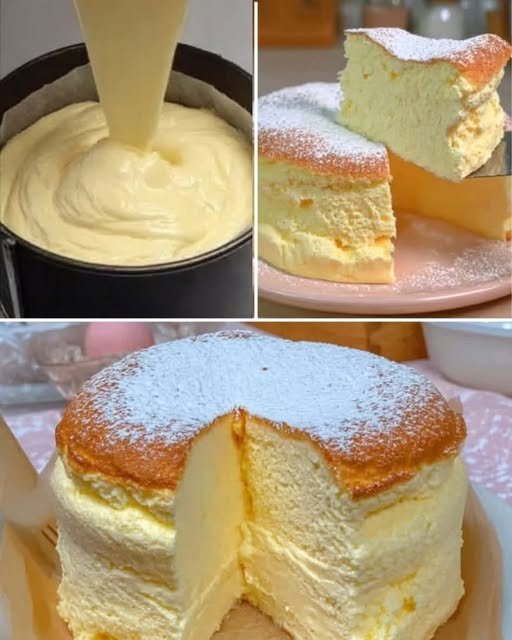

Finding a dessert that fits a low-carbohydrate lifestyle can sometimes be difficult. Many traditional cakes depend on wheat flour and generous amounts of sugar, which may not suit people following keto or reduced-sugar eating patterns. Keto Cloud Cake takes a different approach by using simple, carefully selected ingredients to create a soft and delicate dessert without relying on conventional baking ingredients.
This cake gets its name from its incredibly light and tender texture. Instead of feeling heavy or overly dense like some low-carb baked goods, cloud cake has a soft crumb that feels airy and smooth. A combination of low-carb flours, eggs, healthy fats, yogurt, and keto-friendly sweeteners helps create a dessert that feels special while still fitting into a keto-friendly lifestyle.
Whether you serve it as an everyday treat, an afternoon snack, or a dessert for guests, this cake demonstrates that low-carb baking can still be enjoyable. With the right ingredients and proper preparation techniques, you can create a flavorful, moist, and satisfying cake that works for a variety of occasions.
What Makes Keto Cloud Cake Different?
Traditional cakes generally depend on wheat flour and sugar to provide structure, sweetness, and moisture. When these ingredients are reduced or replaced, a different baking approach is needed.
Keto Cloud Cake uses alternative ingredients that work together to recreate some of the qualities people enjoy about classic cakes:
- Low-carb flour provides structure.
- Eggs create stability and help the cake rise.
- Butter adds richness and tenderness.
- Low-carb sweeteners provide sweetness without traditional sugar.
- Yogurt helps maintain moisture.
The combination produces a cake with a soft and delicate texture rather than the dry or crumbly consistency that can sometimes occur with low-carb baking.
The Secret Behind the Cloud-Like Texture
The name “cloud cake” refers to the dessert’s soft, delicate, and airy texture. Ideally, every bite should feel light while still providing enough moisture and richness to satisfy a dessert craving.
Several factors work together to create this characteristic texture.
Eggs Provide Structure and Airiness
Eggs are one of the most important ingredients in this style of cake. They help bind the ingredients together while also contributing to the cake’s rise during baking.
When eggs are properly incorporated into the batter, they help create tiny pockets of air. These air pockets expand as the cake bakes, helping produce a lighter texture.
The Right Combination of Low-Carb Flours
Low-carb baking often benefits from combining different types of flour because each flour behaves differently.
Almond flour adds:
- Moisture
- Mild nutty flavor
- Tenderness
Coconut flour contributes:
- Absorption
- Structure
- A lighter crumb
Using a combination of these flours can produce a more balanced result than depending on only one type.
Fat Creates a Tender Crumb
Butter plays an important role in the texture of this cake. Fat coats the flour particles and helps prevent the finished cake from becoming overly dry.
Butter also contributes richness and flavor, which balances the mild sweetness provided by keto-friendly sweeteners.
Understanding the Main Ingredients
Almond Flour
Almond flour is one of the most commonly used ingredients in keto baking. It is made from finely ground almonds and contributes moisture, tenderness, and a mild nutty flavor.
Unlike wheat flour, almond flour does not contain gluten, so it behaves differently when mixed and baked. It works particularly well when combined with ingredients such as eggs that provide additional structure.
For the smoothest cake texture, finely ground almond flour is generally the preferred option.
Coconut Flour
Coconut flour is highly absorbent. Even a small amount can absorb a significant quantity of liquid from the other ingredients.
This makes coconut flour useful for balancing moisture from the butter, eggs, and yogurt. However, it needs to be measured carefully.
Using too much coconut flour can result in a dry cake, while the correct amount helps create a soft and stable crumb.
Keto-Friendly Sweeteners
Traditional sugar provides sweetness while also influencing the texture of baked goods. Keto baking therefore requires alternative sweeteners that can provide sweetness without relying on traditional sugar.
Common options include:
- Erythritol
- Monk fruit blends
- Stevia blends
- Allulose
Powdered sweeteners can work especially well because they dissolve more easily into the batter and help create a smoother texture.
The amount of sweetener can also be adjusted according to personal preference and the sweetness level of the specific sweetener being used.
Greek Yogurt or Coconut Yogurt
Yogurt helps address one of the most common challenges in low-carb baking: dryness.
It contributes moisture and helps create a softer interior while adding a mild tang that balances the sweetness of the cake.
For a dairy-free version, unsweetened coconut yogurt can be used instead of Greek yogurt.
Vanilla Extract
Vanilla extract enhances the overall flavor of the cake. Even a small amount can make the dessert taste more complete and balanced.
Sugar-free vanilla extract is often used in keto recipes to avoid adding unnecessary carbohydrates.
The Importance of Ingredient Temperature
Ingredient temperature can make a noticeable difference in the final result.
Room-temperature eggs and softened butter combine more easily, helping create a smoother and more consistent batter.
Cold ingredients can cause the butter to harden or separate, potentially affecting the texture of the finished cake.
For the best results:
- Remove the eggs from the refrigerator before baking.
- Allow the butter to soften naturally.
- Measure all ingredients carefully.
Preparing the Batter Correctly
The way the ingredients are mixed can directly affect the final texture.
Start by creating a smooth mixture of the softened butter and sweetener. This helps distribute the sweetness evenly throughout the batter.
Add the eggs gradually rather than adding them all at once. This allows them to blend properly and reduces the chance of the mixture becoming uneven.
The dry ingredients should be combined separately before being added to the wet ingredients. This helps distribute the baking powder and flours evenly throughout the batter.
Once the flour mixture is added, avoid overmixing. Excessive mixing can make the cake heavier and reduce the delicate texture you are trying to achieve.
Baking Tips for the Perfect Keto Cloud Cake
Prepare the Pan Properly
Line the cake pan with parchment paper to help prevent sticking and make removing the cake easier after baking.
Properly preparing the pan also helps the cake maintain its shape when it is removed.
Use the Correct Temperature
The baking temperature has an important effect on the final texture.
A moderate oven temperature allows the cake to rise evenly while giving the center enough time to cook properly.
If the oven temperature is too high, the outside may brown too quickly while the inside remains underbaked.
Avoid Overbaking
Low-carb cakes can become dry when they are baked for too long.
A toothpick inserted into the center should come out clean or with a few moist crumbs attached.
Remember that the cake can continue setting slightly as it cools, so it does not need to remain in the oven longer than necessary.
Cooling Is an Important Step
It can be tempting to slice a cake immediately after taking it from the oven, but allowing it to cool is an important part of the process.
As the cake cools:
- The structure becomes stronger.
- Moisture redistributes throughout the cake.
- The texture becomes softer and easier to slice.
Allowing the Keto Cloud Cake to cool completely generally produces cleaner slices and a better final texture.
Serving Suggestions
Keto Cloud Cake tastes delicious on its own, but keto-friendly toppings can make it even more enjoyable.
Fresh Berries
Low-sugar fruits can add natural color, freshness, and flavor.
Good options include:
- Strawberries
- Raspberries
- Blackberries
Blueberries can also be used in moderation.
Whipped Cream
A small amount of unsweetened whipped cream creates a classic dessert combination and adds extra creaminess to each slice.
Sugar-Free Chocolate
Chocolate shavings, sugar-free chocolate chips, or a light sugar-free chocolate drizzle can create a richer dessert experience.
Nut Toppings
Chopped nuts provide additional crunch and flavor.
Good choices include:
- Almonds
- Pecans
- Walnuts
Cream Cheese Frosting
A thin layer of keto-friendly cream cheese frosting can transform the simple cloud cake into a more decorative dessert suitable for celebrations.
Flavor Variations
The basic cloud cake recipe can be adapted in several different ways.
Lemon Cloud Cake
For a bright citrus variation, add:
- Fresh lemon zest
- A small amount of lemon extract
The citrus flavor adds freshness while maintaining the soft cake texture.
Chocolate Cloud Cake
For a richer chocolate version, include:
- Unsweetened cocoa powder
- Sugar-free chocolate chips
This creates a deeper chocolate flavor while keeping the recipe aligned with a low-carb approach.
Cinnamon Spice Cake
Add:
- Ground cinnamon
- Nutmeg
- A pinch of cloves
These warm spices give the cake a comforting bakery-style flavor.
Coconut Cloud Cake
For a tropical variation, mix in:
- Unsweetened shredded coconut
- Coconut extract
The coconut adds both flavor and texture.
Berry Layer Cake
Turn the cloud cake into a layered dessert by slicing it horizontally and adding:
- Whipped cream
- Fresh berries
between the layers.
Common Problems and Solutions
Cake Is Too Dense
If the finished cake feels too heavy or dense, possible causes include:
- Overmixing
- Incorrect ingredient ratios
- Not enough air incorporated into the batter
Solution
Mix gently once the dry ingredients have been added and make sure the eggs are properly incorporated.
Cake Falls After Baking
Some settling is normal as a cake cools, but a significant collapse may indicate:
- Underbaking
- Too much liquid
- Opening the oven too early
Allow the cake to bake completely before removing it from the oven. Avoid opening the oven unnecessarily during the early stages of baking.
Why This Dessert Works for Many Occasions
Keto Cloud Cake is more than simply a low-carb alternative to traditional cake. Its soft texture and adaptable flavor make it suitable for many different situations.
It can be served as:
- A weekday dessert
- A birthday treat
- A holiday sweet
- A coffee-time snack
- A simple after-dinner dessert
Its balanced flavor also makes it appealing to people who do not necessarily follow a keto lifestyle.
Fluffy Keto Cloud Cake Recipe
This Keto Cloud Cake is a soft and tender dessert designed for anyone who enjoys a light cake while reducing traditional carbohydrates. It combines low-carb baking ingredients to create a moist crumb, gentle sweetness, and delicate texture that works well for both everyday desserts and special occasions.
Unlike many low-carb cakes that can feel heavy, this recipe focuses on creating a balanced texture. Almond flour, coconut flour, eggs, butter, and yogurt work together to produce a cake that is flavorful, moist, and satisfying while maintaining its delicate character.
Enjoy the cake plain with coffee or tea, or dress it up with keto-friendly toppings such as whipped cream, berries, or sugar-free chocolate.
Recipe Information
Recipe Name: Keto Cloud Cake
Category: Keto Dessert, Low-Carb Baking
Difficulty: Easy
Preparation Time: 15 minutes
Baking Time: 35–40 minutes
Cooling Time: 30 minutes
Total Time: Approximately 1 hour 20 minutes
Servings: 10 slices
Calories: Approximately 280–320 calories per serving
Net Carbohydrates: Approximately 4–6 grams per serving
Ingredients
Cake Ingredients
- 1 cup plain Greek yogurt or unsweetened coconut yogurt
- 1 cup powdered erythritol or another keto-friendly powdered sweetener
- ¾ cup unsalted butter, softened
- 1 cup almond flour
- ¼ cup coconut flour
- 5 large eggs, room temperature
- 2 teaspoons sugar-free vanilla extract
- 2 teaspoons baking powder
- ¼ teaspoon salt
Optional Toppings
Choose any combination of keto-friendly toppings:
- Unsweetened whipped cream
- Fresh strawberries
- Raspberries
- Blackberries
- Blueberries, in moderation
- Sugar-free chocolate chips
- Chopped pecans
- Sliced almonds
- Coconut flakes
- Sugar-free chocolate drizzle
- Cream cheese frosting
Equipment Needed
- 8-inch or 9-inch round cake pan
- Mixing bowls
- Electric hand mixer or stand mixer
- Measuring cups and spoons
- Rubber spatula
- Parchment paper
- Toothpick for testing doneness
- Cooling rack
Step-by-Step Instructions
Step 1: Prepare the Oven and Pan
Preheat the oven to 350°F (175°C).
Line an 8-inch or 9-inch round cake pan with parchment paper. Lightly grease the sides of the pan to make removing the cake easier after baking.
Proper preparation helps prevent sticking and allows the finished cake to maintain its shape.
Step 2: Combine Butter and Sweetener
Place the softened unsalted butter in a large mixing bowl.
Add the powdered erythritol or your preferred keto-friendly powdered sweetener.
Using an electric hand mixer or stand mixer, beat the butter and sweetener together until the mixture becomes smooth, creamy, and slightly fluffy.
This step helps distribute the sweetener evenly while creating a good foundation for the cake batter.
Step 3: Add the Eggs
Add the room-temperature eggs one at a time.
Mix well after each addition before adding the next egg.
Adding the eggs gradually helps them blend into the butter mixture and reduces the possibility of separation.
Continue mixing until the mixture looks smooth and uniform.
Step 4: Add Yogurt and Vanilla
Add the plain Greek yogurt or unsweetened coconut yogurt to the mixture.
Pour in the sugar-free vanilla extract.
Mix gently until the yogurt and vanilla are fully incorporated.
The yogurt contributes moisture and helps create the soft interior that gives the cake its delicate texture.
Step 5: Prepare the Dry Ingredients
In a separate mixing bowl, combine:
- Almond flour
- Coconut flour
- Baking powder
- Salt
Stir the dry ingredients together until they are evenly distributed.
This ensures that the baking powder and salt are properly incorporated throughout the flour mixture.
Step 6: Combine Wet and Dry Mixtures
Slowly add the dry ingredients to the wet mixture.
Mix gently until a smooth batter forms.
Avoid overmixing because excessive mixing can make the cake heavier and reduce its light texture.
The finished batter should be thick but spreadable.
Step 7: Transfer the Batter to the Pan
Pour the batter into the prepared cake pan.
Use a rubber spatula to spread and smooth the surface evenly.
Gently tap the pan on the counter to help release any large air bubbles.
Step 8: Bake the Cake
Place the cake pan in the preheated oven.
Bake for approximately 35–40 minutes.
The cake should be ready when:
- The top is lightly golden.
- The center feels firm.
- A toothpick inserted into the center comes out clean or with a few moist crumbs.
Avoid overbaking because low-carb cakes can lose moisture when they remain in the oven for too long.
Step 9: Cool Before Serving
Remove the cake from the oven and allow it to cool in the pan for approximately 15 minutes.
Carefully transfer the cake to a cooling rack and allow it to cool completely before slicing.
Cooling gives the cake time to finish setting and helps improve its structure and texture.
Step 10: Add Toppings and Serve
Once the cake has cooled completely, decorate or serve it according to your preference.
Simple topping options include:
- A dusting of powdered erythritol
- Fresh berries
- Unsweetened whipped cream
- Chopped nuts
Slice the cake and serve.
Approximate Nutrition Facts
Per Serving: 1 slice, without toppings
- Calories: 300
- Total Fat: 29 g
- Saturated Fat: 12 g
- Protein: 7 g
- Total Carbohydrates: 8 g
- Dietary Fiber: 3 g
- Net Carbohydrates: 5 g
- Sugar: 2 g
- Sodium: 180 mg
- Calcium: 90 mg
- Iron: 1.5 mg
Nutrition values are estimates and may vary depending on the ingredients, brands, preparation methods, and serving size.
Helpful Baking Tips
Use Room Temperature Ingredients
Room-temperature eggs and softened butter blend more easily and help create a smoother batter.
Cold ingredients can make the butter harder to incorporate and may result in uneven mixing.
Measure Coconut Flour Carefully
Coconut flour absorbs a considerable amount of moisture.
Because of this, adding too much can make the cake dry. Accurate measuring is therefore particularly important when using coconut flour.
Do Not Overmix
Once the dry ingredients have been added, mix only until everything is combined.
Overmixing can make the cake heavier and reduce the soft, airy texture.
Allow Proper Cooling Time
Avoid cutting the cake while it is still warm.
The cake needs time to cool and stabilize. Cutting it too early may cause the slices to crumble or lose their structure.
Adjust Sweetness
Different keto-friendly sweeteners can vary considerably in sweetness.
If you use a different sweetener from the one listed, the sweetness level may change. Adjust according to your personal preference while keeping in mind that different sweeteners can behave differently in baking.
Storage Instructions
Room Temperature
Store the cake covered in an airtight container at room temperature for up to one day.
Keep the container away from excessive heat and moisture.
Refrigerator Storage
For longer freshness:
- Place the cake in a sealed container.
- Refrigerate for up to 5 days.
For a softer texture, allow individual slices to sit at room temperature briefly before serving.
Freezer Storage
This cake can also be frozen for longer storage.
To freeze the cake:
- Cut the cake into individual slices.
- Wrap each slice tightly.
- Place the wrapped slices in a freezer-safe container.
When ready to serve, frozen slices can be thawed in the refrigerator overnight or allowed to thaw at room temperature before eating.