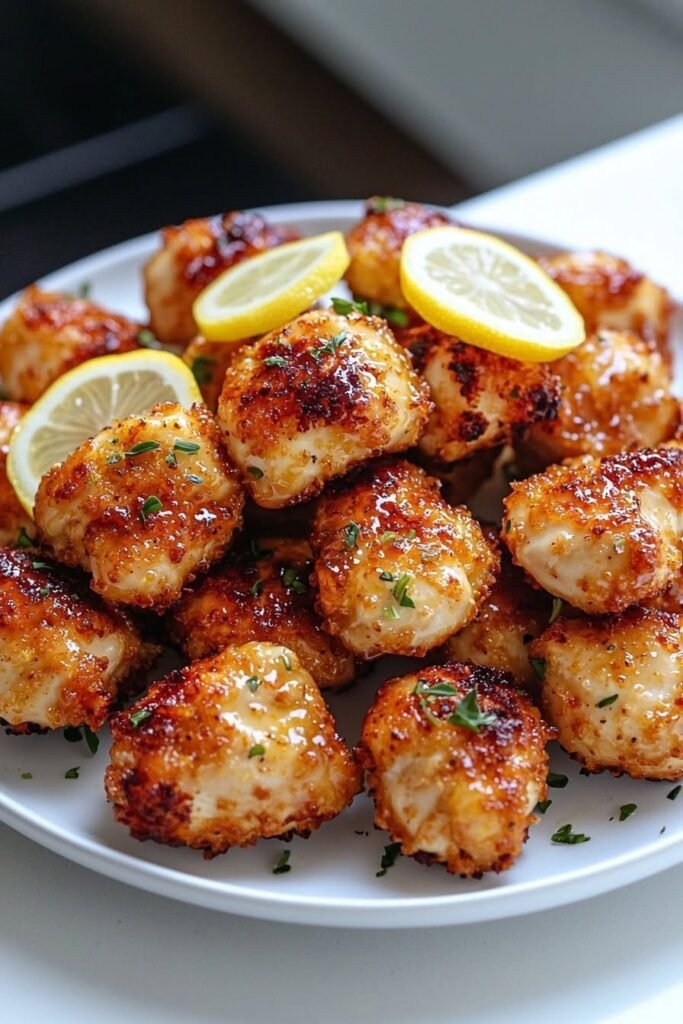

Juicy chicken bites cooked in a bright lemon-garlic marinade, lightly crisped on the outside, tender inside, and finished with a buttery citrus glaze. This is one of those recipes where a few simple ingredients can create surprisingly big flavor when they are handled correctly.
The combination of fresh garlic, lemon, butter, olive oil, and carefully chosen seasonings gives these chicken bites a balanced flavor that is savory, tangy, buttery, and slightly sweet. You can cook them in a skillet for the best browning, use an air fryer for a lighter crispy finish, or bake them in the oven when preparing a larger batch.
What Makes This Recipe So Good?
Before cooking, it helps to understand how the ingredients work together.
- Chicken provides the protein base and becomes juicy and tender when cooked correctly.
- Garlic gives the dish a deep savory aroma, especially when freshly minced and gently cooked.
- Lemon adds acidity that brightens the overall flavor and helps tenderize the chicken.
- Oil or butter carries the flavors throughout the chicken while also helping create attractive browning.
The key is balancing four important elements:
- Acid: Lemon
- Fat: Olive oil and butter
- Aromatics: Garlic
- Seasoning: Salt and spices
When these components are balanced properly, the chicken develops flavorful browned edges while remaining juicy in the center.
Ingredients
Chicken
- 500g boneless chicken breast or thigh
- Cut into even 1 to 1.5-inch cubes
You can use either chicken breast or chicken thigh for this recipe.
Chicken breast is leaner and has a slightly firmer texture.
Chicken thigh is juicier and more flavorful, which is why it is the recommended option for especially tender chicken bites.
Try to cut all the pieces into similar sizes. Even pieces cook at approximately the same rate, helping prevent some pieces from becoming dry while others remain undercooked.
Lemon Garlic Marinade
- 4–6 cloves garlic, freshly minced
- 2–3 tbsp fresh lemon juice
- 1 tbsp lemon zest, optional
- 2 tbsp olive oil
- 1 tbsp soy sauce
- 1 tsp honey or sugar
- 1 tsp black pepper
- 1 tsp paprika
- ½ tsp salt, adjusted later if using soy sauce
- ½ tsp chili flakes, optional
Freshly squeezed lemon juice provides a brighter flavor than bottled lemon juice. Lemon zest is optional, but it adds an especially strong citrus aroma.
The soy sauce contributes savory depth, while a small amount of honey or sugar balances the sharpness of the lemon.
Cooking Fat
- 2–3 tbsp butter or olive oil
You can use either butter or olive oil, or combine both for a richer flavor and better overall result.
Garnish
- Fresh parsley or coriander
- Lemon wedges
Fresh herbs add color and freshness, while lemon wedges allow everyone to add extra citrus flavor according to their preference.
Step 1: Prepare the Chicken Properly
This step is easy to overlook, but it can make a noticeable difference in the finished chicken.
Start by patting the chicken completely dry with paper towels. Remove as much surface moisture as possible before cutting and marinating.
Cut the chicken into even 1 to 1.5-inch cubes. If some pieces are significantly thicker than others, you can lightly score the thicker pieces if desired.
Why Does This Matter?
- Dry chicken: Helps create better browning.
- Even pieces: Promote more even cooking.
- Light scoring: Can help the marinade reach deeper into thicker pieces.
Taking a few extra moments to prepare the chicken properly helps improve both texture and appearance.
Step 2: Build the Lemon Garlic Marinade
Add the fresh lemon juice, lemon zest, minced garlic, olive oil, soy sauce, honey or sugar, black pepper, paprika, salt, and optional chili flakes to a bowl.
Mix everything thoroughly until the ingredients become slightly emulsified and evenly combined.
Add the prepared chicken pieces to the marinade.
Toss the chicken thoroughly so every piece is coated with the mixture.
Why This Marinade Works
Each ingredient has a specific purpose:
- Lemon juice helps break down proteins and contributes brightness.
- Olive oil carries the garlic and other flavors into the chicken.
- Soy sauce adds savory umami depth.
- Honey or sugar balances the sharp acidity of the lemon.
- Garlic and spices create the main savory flavor profile.
The result is a marinade that tastes bright and savory rather than simply sour or salty.
Step 3: Marinate the Chicken
Cover the bowl and place the chicken in the refrigerator.
The recommended marination times are:
- Minimum: 30 minutes
- Ideal: 2–6 hours
- Maximum: 12 hours
The 2–6 hour range gives the chicken enough time to absorb the flavors while maintaining a pleasant texture.
Avoid leaving the chicken in the lemon-based marinade for longer than 12 hours. Extended exposure to acidic ingredients can eventually affect the texture and make the chicken feel mushy.
Step 4: Choose Your Cooking Method
There are three easy ways to cook these lemon garlic chicken bites. Choose the method that best suits your kitchen and the result you want.
Method 1: Pan-Fried Lemon Garlic Chicken Bites
Pan-frying provides the best combination of flavor and browning.
How to Cook
- Place a skillet over medium-high heat.
- Add the butter and oil.
- Wait until the butter begins to foam slightly, which indicates that the pan is hot enough.
- Add the marinated chicken pieces without overcrowding the pan.
- Allow the chicken to sit undisturbed for approximately 2–3 minutes before turning.
Cook the chicken for approximately 8–12 minutes total, depending on the size of the pieces and the heat of your pan.
What You Want
The finished chicken should have:
- Golden-brown edges
- Slight caramelization
- A juicy center
Avoid constantly stirring or moving the chicken around. Too much movement prevents the surface from staying in contact with the hot pan long enough to develop good browning.
Method 2: Air Fryer Lemon Garlic Chicken Bites
The air fryer is a convenient option when you want chicken bites that are lightly crisp on the outside with less added oil.
How to Cook
- Preheat the air fryer to 190°C.
- Lightly spray the basket with oil.
- Arrange the chicken pieces in a single layer.
- Cook for 10–12 minutes.
- Shake the basket halfway through cooking.
The result should be slightly crisp on the outside while remaining juicy inside.
Avoid overcrowding the basket because good airflow is important for achieving a lightly crisp exterior.
Method 3: Oven-Baked Lemon Garlic Chicken Bites
The oven method is useful when you want to prepare a larger batch.
How to Cook
- Preheat the oven to 200°C.
- Spread the chicken pieces across a parchment-lined baking tray.
- Bake for 15–18 minutes.
- Flip the chicken halfway through cooking for more even color.
Arrange the pieces with some space between them when possible so they roast rather than simply steam.
Step 5: Make the Signature Lemon Garlic Glaze
The finishing glaze is what takes these chicken bites to another level.
After cooking the chicken in a skillet, use the same pan to prepare the glaze.
Add:
- 1 tbsp butter
- 1 tsp minced garlic
- 1–2 tbsp lemon juice
- A pinch of chili flakes, optional
Allow the mixture to bubble gently for approximately 30–45 seconds.
Do not burn the garlic. Once the glaze is fragrant and combined, add the cooked chicken back to the pan.
Toss the chicken through the glaze until every piece is evenly coated.
Why the Glaze Matters
The final glaze adds several important elements:
- Fresh garlic aroma reaches your senses immediately.
- Butter smooths the acidity of the lemon.
- Lemon adds freshness and brightness.
- The glaze coats every chicken bite evenly.
This final step gives the chicken a more finished, restaurant-style flavor.
Step 6: Serve the Chicken Bites
Serve the chicken immediately while it is hot and freshly glazed.
These bites pair well with a variety of side dishes.
Best Pairings
- Steamed rice or garlic rice
- Mashed potatoes
- Creamy pasta
- Wraps or pita bread
For a simple finishing touch, scatter fresh parsley or coriander over the chicken and serve lemon wedges on the side.
You can also add an optional drizzle of the remaining pan sauce for extra flavor.
Texture You Should Aim For
A properly cooked lemon garlic chicken bite should have three main characteristics.
Outside
The exterior should be lightly golden with slightly crisp or caramelized edges.
Inside
The center should remain juicy and tender rather than dry or chewy.
Flavor
The overall flavor should have a balanced combination of tangy lemon, buttery richness, savory garlic, and seasoning.
Common Mistakes and How to Fix Them
Chicken Turns Dry
Problem: The chicken was overcooked or exposed to high heat for too long.
Fix: Watch the cooking time carefully and avoid continuing to cook the chicken after it has reached the desired doneness.
Smaller chicken pieces cook quickly, so they can become dry if left in the pan too long.
No Browning
Problem: The pan was overcrowded or was not hot enough.
Fix: Use a sufficiently hot pan and cook the chicken in batches if necessary.
Giving each piece enough contact with the hot cooking surface helps create golden-brown edges.
Chicken Tastes Too Sour
Problem: The lemon flavor is overpowering.
Fix: Add more honey or butter to the glaze to balance the acidity.
The goal is not to eliminate the lemon flavor but to create a better balance between acidity, sweetness, and richness.
Garlic Tastes Bitter
Problem: The garlic was burned.
Fix: Cook the garlic over medium heat and watch it carefully.
Garlic can develop a bitter taste when it becomes too dark, so gentle cooking is important for the glaze.
Flavor Variations
The basic lemon garlic combination is easy to customize. Once you have mastered the original version, try one of these variations.
Spicy Lemon Garlic Chicken
For additional heat, add:
- Extra chili flakes
- Cayenne pepper
You can adjust the amount according to your preferred spice level.
Creamy Lemon Garlic Chicken
For a richer variation, add at the end:
- 2–3 tbsp cream
- A little cheese, optional
Stir the cream into the finished sauce carefully so it creates a smooth coating around the chicken.
Sweet Glazed Lemon Garlic Chicken
For a sweeter, stickier finish, increase the amount of honey and slightly reduce the lemon.
This creates a more pronounced sweet-and-tangy coating while keeping the garlic flavor present.
Helpful Tips for the Best Chicken Bites
Dry the Chicken Before Cooking
Patting the chicken dry helps remove excess surface moisture and encourages better browning.
Cut the Pieces Evenly
Uniform chicken cubes cook at a similar rate, making it easier to achieve a juicy result.
Do Not Overcrowd the Pan
Too many pieces in the skillet lower the temperature and create excess moisture. Cook in batches if needed.
Avoid Constant Stirring
Let the chicken remain in contact with the hot surface for a couple of minutes before turning. This encourages golden edges and caramelization.
Watch the Garlic
Fresh garlic provides excellent flavor, but it can burn quickly. Keep the heat controlled when preparing the finishing glaze.
Serve Immediately
The chicken is at its best when served hot, shortly after being coated with the buttery lemon-garlic glaze.
Final Thoughts
Lemon Garlic Chicken Bites are proof that simple ingredients can create a flavorful and satisfying meal when the cooking technique is handled correctly. Fresh garlic, lemon, olive oil, butter, soy sauce, and basic spices work together to create juicy chicken with golden edges and a bright, buttery finish.
The recipe is flexible enough to prepare in a skillet, air fryer, or oven. Serve the finished chicken with rice, mashed potatoes, creamy pasta, wraps, or pita bread, then finish it with fresh herbs and lemon wedges for an extra burst of freshness.
Whether you choose the pan-fried version for deeper browning, the air fryer for a lightly crisp finish, or the oven for convenient batch cooking, the key is the same: keep the chicken juicy, avoid burning the garlic, and balance the lemon with enough richness and sweetness.